Thursday, May 17, 2018

5/16 through 5/18: Sapa and Maxwell's birthday by Robert

5/16: The night train for Sapa left Hanoi at 9:35 pm and arrived in Lao Cai on the Chinese border at 5 am. After a one hour bus ride we arrived in Sapa town.

5/17: Sapa is a lovely little town in northwest Vietnam, though not so small anymore. Development is intense. Still, in comparison to everywhere else we have been, including our first stop in the town of Hoian, it is nice and quiet here. Sapa is the home to a large number of ethnic minority groups. Due to dependence on the tourist trade, more English is spoken here than anywhere else we have been. We will spend one day here then head to the countryside for a three-day small group rural experience. I think everyone is looking forward to groups of 13, as opposed to 65. It should be a peaceful and relaxing three days apart.

street scene

View from our balcony

Also balcony view - so much development in Sapa over the years

Night view from the balcony

Our meeting spot on the 7th floor roof deck


5/18: This morning the students and adults are dividing into 5 groups, with each group spending three nights at their village. While in Seattle reports were written about the minority people we will visit. The five villages we are heading to are: Ban Ho village with the Tay people, Giang Ta Chai village with the Red Dao and H’mong people, Ta Van village with the Zay people, Nam Sai village with the Tay and Giay people, and Ta Phin with the Red Dao people. 

We will be "going dark" for the next 3 days until our return to Sapa town on 5/21.

Tuesday, May 15, 2018

5/15 Mike's Village, Vietnamese war veterans, and meditation by Robert


5/15 Mike’s Village
Visiting Mike’s village (our tour operator) is one of my favorite days on the trip. The village lays about 40 km outside of Hanoi, but feels like another world. Mike’s family has lived in this village forever, so he knows everyone (in fact, we met many of his relatives). We visited the Tuesday morning local market, briefly toured the village, watered the pigs, then headed back to Mike’s house, where we asked questions of the Vietnamese war veterans, then had a delicious lunch in Mike’s home, all prepared by Mike’s extended family. After relaxing in Mike’s house during the heat of the day, we went to a tributary of the Red River for a refreshing swim before heading back to Hanoi. 


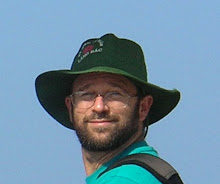
Guess who bought a new hat (worth 5 points for the correct answer)


Mike's older brother, also named Ha, with Mike's daughter Trang and Ha's son Min


dragon fruit

Watering the pigs - one of my favorite things to do 


Mike, with his aunt

laundry shot

5 veterans of the American war came to share their stories (while our guide Ha and our chaperone Khoi translated) and answer their questions:
  • Mike’s father, Do Van Ngu
  • Chung (80 years old, who participated in both the French and American wars)
  • Hien (73 years old)
  • Sung (78 years old)
  • Suyen (66 years old)

Mr. Sung started the sharing. We was involved in the American War from 1965 to the final South Vietnamese surrender. He participated in the Tet Offensive. He told the students, “What I saw was so terrible but that was the past. There is no animosity between Vietnam and the United States. All the fighting is in the past.” When asked why he joined the North Vietnamese army, Chung replied, “I am the Vietnamese person. I am a native. I have an obligation to join the army to protect Vietnam.”

Next, Mrs. Suyen spoke. This is the first time we have had a women veteran to share her story. Suyen joined the army when she was 17 years old. She was in the military from 1972 to 1977. It was explained to us that women prepared the weapons, the food, and the roads.

The question was asked, “If you met an American vet, what would you say to him?” Mr. Hien answered, “Look to the future. No talking about the war. We are friends together. Build the two nations – the economy and happiness. If I see an American vet, I shake his hands and say hello.” Next, Suyen answered the same question. “War was caused by the army, by the president. Not the people. The war has nothing to do with us. You did your job and I did my job. That is all.”

When asked what was the most difficult thing about the war, Suyen responded, “No green vegetables due to all the vegetables destroyed.” It was then explained to us that Suyen and Hien both suffer from exposure to Agent Orange, but their children were not affected.

There were a few questions about post-traumatic stress experienced by the Vietnamese veterans, and it was explained that the Vietnamese vets came home as heroes and were treated so well by the government and their communities, so they did not experience what many of the American veterans experienced. Make’s father has suffered from lung problems since the war. He said that the American war was much more severe than the French war, and that he sometimes relives the fires and bombings. Suyen mentioned that many of her friends died from B-52 bombs. “During the war, I was not afraid. But now I think about it and I am scared.” And Mr. Hien answered, “American soldiers – compulsory to fight. But I am volunteer. I give my blood to fight. I have no sorrow. I am happy to fight for my nation. I fight to liberate my people. No guilt. No remorse.”

When asked how the war affected them, how it changed them or their personality, Mr Hien responded, “We always suffer from war.”

The next question was, “As you experience your daily life, what makes you proud that you fought?” Hien said, “I feel very proud and people are proud for the victory.” Suyen said, “All people are proud for our nation. We know how to protect the country. We are proud to be Vietnamese. We are proud of our grandfathers, and proud of our fathers.”

Finally, the veterans were asked what advice they would give the younger generation. Mrs. Suyen said, “Forget the past. Look to the future. Study hard. Build your country.” Mr. Sung said, “Work hard. Build a good relationship with other countries.”


Group shot with the Vietnamese war veterans

Hieu, with Mike's father Do van Ngu


Mike's family meal after all of the students finished lunch
We are entering the final 10 days. It is time to get serious and a bit heavy. The meditation/lesson tonight was about turning adversity into growth through an exploration of the masks we wear sand the limited perspectives we hold, and owning our biases and expanding our perspectives through investigation of the stories we tell ourselves of who we are.

5/14 Pen Pal Day by Robert


5/14 Pen pal day
Yesterday we spent an amazing day with our pen pals. We boarded the bus early and traveled 40 minutes to Hai Boi village and Bat Trang School. Hai Boi village is a traditional pottery village (Eli has even seen pots from Hai Boi village at Sky Nursery). It is fascinating to see shop after shop after shop selling pottery goods. One Vietnamese student said, “This is what my parents do, and what my grandparents do.”

After greeting our pen pals in the school court yard and exchanging gifts, we gathered together in the courtyard, saw a slide show of their school and their village, then shared lots of songs. We then played games together: walking on silts, dancing through the bamboo sticks, and breaking hanging pottery with a stick while blindfolded. Students kicked the ball together or threw the Frisbee. It was so heartwarming watching the students engaged with each other.

After a meal together, we all headed to the pottery studio, where we were taught how to shape clay into a variety of blobs, some of them sort of resembling a bowl or cup. In groups of 6 (three Evergreen students with their three Vietnamese pen pals), students explored the village.

It was sad saying goodbye to our pen pals. It was such a sweet day.


After meeting pen pals, we all met in the courtyard


performing a song


attempting to smash the pottery


Introduction to the pottery lesson

demonstration - it looked so easy


Farewell group shots


The evening meeting sharing was about connections.

Tomorrow we have another whole group day, as we head to Mike’s village and meet a panel of Vietnamese war veterans. This is one of the most important significant events of the trip, and I am really looking forward to it.

Sunday, May 13, 2018

5/13 Hanoi: SLIP Day 1 group 2, and Dani's birthday with Robert

Banana bicycle

Laundry shot
 The first stop on Group 2's SLIP itinerary was the Museum of Ethnology. Of Vietnam's 90 million people, 86% are the Kinh people, but there are 53 minority groups that live in Vietnam, each with its own language, lifestyle, and cultural heritage. We will visit a few of these minority groups in Sapa in just a few days.

  • Tay people: 1,600,000 people
  • Dao People: 750,000 people
  • Zay people: 50,000 people
  • H'mong people: 1,300,000 people


Long house from Ky village

Bana communal house

Ede long house

offering
 We then went to Tran Quoc Pagoda, located on Westlake

incense offering

Another laundry shot


Thursday, May 10, 2018

5/10 NGO Day: Healing the Wounded Heart Future School by Robert

NGO Day is an addition to the Vietnam program, inspired by our Peru itinerary. Our tour operators were able to connect with three NGOs that have 6 different sites. In Seattle students read about the different options and chose what was most interesting to them.

Here were the students' 6 options:
Option 1) Friends of Hue: Their mission is to promote positive aspects of humanity by providing assistance to the people and empowering them in their efforts to improve their lives, communities, and cultures. Friend of Hue Foundation is a nonprofit foundation that supports a children’s shelter in Vietnam to give children who are abused or abandoned a place to live.

Option 2) Healing the Wounded Heart: Working with 17 deaf children. Healing the Wounded Heart is a humanitarian aid project of the Spiral Foundation provides vital assistance to children with disabilities and/or sickness and their families in Central Vietnam and the Central Highlands.

Option 3) Healing the Wounded Heart Future School: a semi-boarding model for about 50 children with mental retardation between the ages of 6 and 25. Healing the Wounded Heart is a humanitarian aid project of the Spiral Foundation provides vital assistance to children with disabilities and/or sickness and their families in Central Vietnam and the Central Highlands.

Option 4) Healing the Wounded Heart Duc Son Orphanage: there are more than 200 orphans raised in the center. In addition, there’re also 2 special education classes for 15 mentally disabled children at the center.

Option 5) Healing the Wounded Heart Farms for disable people: established to educate about 20 children with mental retardation from 16 years old, doing daily tasks like raising livestock and planting crops. Healing the Wounded Heart is a humanitarian aid project of the Spiral Foundation provides vital assistance to children with disabilities and/or sickness and their families in Central Vietnam and the Central Highlands.

Option 6) PeaceTrees Vietnam: Their mission is to heal the legacy of war by removing dangerous explosives, returning land to safe use, promoting peace and cultivating a brighter future for the children and families of Vietnam. Their vision is: A Vietnam completely cleared of dangerous unexploded ordnance and communities fully supported in their goals for safety, education and economic success. PeaceTrees Vietnam is a shining example to the world of how tragedy and conflict can be transformed into peace and partnership.

 I took a group of 4 students to Healing the Wounded Heart Future School. Future School was founded in 2001. It  was the first school for the disabled in the city of Hue. Hue has a super high rate of physically and mentally disabled students, being so close to the DMZ (Hue is just south of the 17th parallel, the border between North and South Vietnam during the American War), which was so heavily bombed by the United States, including the use of Agent Orange. 

The Future School  has 56 students and 5 classes. It received no government funding, and is totally dependent on private donations. We went into a number of different classrooms, dividing students by  ability level. 


Then students from another classroom joined us. They were much higher functioning. The boy in the red took charge.  I showed him how to use my camera, and he quickly became a master. The next five pictures are his. 


He gently removed her hair from her ear and gave her a kiss.

Here he is looking clever. He was quite a ham.

In another classroom, he organized a game where we all put a feet in the middle of the circle.
At the meeting tonight, students explained the work each NGO does, and shared their the best part of their experience. It was heartwarming to hear so many stories of connection. I have been talking to the students about the connection between adversity and personal growth/appreciation. The students have gained such insight about all that they have in their lives (things they have taken for granted) by witnessing others that have dealt with or are dealing with such adversity. But so far, it has been others' adversity. The next step is to be able to grow from the adversity in our own lives. Today we talked about how stuff happens that is out of our control, but the power that we each have is how we respond to it. We can either be victims of our circumstances, or we can grow from the experience. We will continue this line of thought in the days to come.